


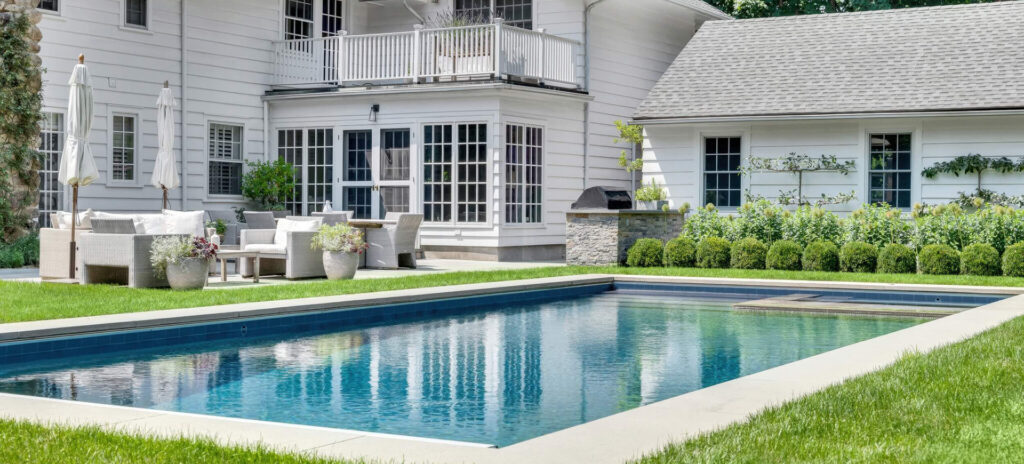
The longer the seasonal chill dispirits, the more Connecticut Tri-State area pool owners long for the sunny swimming season to return. Imagine the picture-perfect day when families reopen their inground swimming pools, ready for the big splash.
However, that day isn’t as magical as imagined when met with a murky, cracked, and flaking pool finish. Years of use and long-term exposure to the sun, chemicals, water, and weathering calls for an inground pool resurfacing.
There is no single best inground pool finish. However, what surface you choose impacts not only your pool’s appearance, but also its longevity, maintenance requirements, and overall value.
Why Pool Resurfacing Matters
Pool resurfacing is a common pool maintenance process. The surface and finish of an inground pool are largely responsible for the swimming experience and structural integrity of an inground swimming pool.
Pool resurfacing significantly increases a pool’s value by:
- Updating pool aesthetics & water appearance
- Protecting swimmer from cuts, slipping, and injuries
- Preventing damage to inground pool shell (ex. seals leaks)
- Improving cleaning and water hygiene (ex. reduce algae growth)
- Balancing chemical levels in water
- Reducing risk of major expenses in the future
- Boosting property value
When there is damage or wear to the pool’s interior finish, replacing it with a fresh, high-quality protective coating ensures the swimming experience and pool health is maintained long-term.
When is it Time to Resurface a Pool?
Although inground pools have different lifespans, with proper maintenance and high-quality materials, a concrete inground pool in the Connecticut and Tri-State Area requires resurfacing every 10-15 years.
Especially with the Connecticut freeze-thaw weather, pool owners should keep an eye out for the following signs of pool damage:
- Staining or discoloration
- Cracking or flaking
- Rough, uneven texture
- Leaking and structural damage
- Persistent algae growth
- Increased chemical use
- Visible concrete
When the swimming pool begins to look dated and out-of-trend, resurfacing is well needed.
After water is drained and the old, worn-out pool interior is removed, a fresh interior can be installed, upgrading the whole swimming pool experience.
Comparing the Most Popular Pool Resurfacing Materials
1. Plaster
Plaster is the standard material for pool resurfacing, seen in many traditional concrete inground pools.
- Most affordable option ($5,000 to $10,000)
- Classic, smooth appearance
- Shortest lifespan (7-12 years)
However, this cement-based coating is significantly more prone to staining than other materials, requiring additional maintenance and chemical balancing.
Connecticut pool owners should consider a plaster pool finish for pool resurfacing when under budget constraints.
2. Quartz Aggregate
Quartz aggregate is a popular option for its beauty and durability. This blend of plaster and crushed quartz offers a more stain resistant feature than the plaster alternative.
- Moderate price ($7,000 to $15,000)
- Durable, slightly textured feel with many color options
- Lifespan (12–18 years)
Connecticut pool owners should consider a quartz aggregate pool finish for pool resurfacing when seeking a durable, affordable option that creates a vibrant aesthetic.
3. Pebble Aggregate
Pebble aggregate blends natural river pebbles and cement, providing a highly, durable textured, non-slip surface. It is highly resistant to chemicals and built to withstand years of use and exposure to the elements.
- Higher upfront investment ($9,000 to $20,000+)
- High-end, textured appearance
- Long lifespan: (15-25+ years)
Custom, textured feel and high-end durability come at a significantly higher price.
Connecticut pool owners looking to build a nature-inspired, high-end custom pool should consider pebble aggregate pool finish for pool resurfacing, especially considering its long-term durability.
4. Tile
Pool tiles are used along the waterline to protect the pool coping. Once they are used for the entire pool surface, however, it dramatically elevates the pool’s atmosphere.
This non-porous material is resilient to UV, algae, and chemicals, considerably increasing the lifespan of the pool. When considering this option, keep the following in mind:
- Incredibly expensive cost ($20,000 to $50,000+)
- Luxury, shimmering aesthetic
- Nearly permanent lifespan (20+ years)
As visually striking and durable as it is, pool tile finish requires a long, expensive, and labor-intensive installation process.
Connecticut pool owners should consider tile pool finish for pool resurfacing if they have a large budget. If so, the result is a stunning, long-term, luxury backyard investment in their backyard that will make their pool sparkle.
Which Pool Finish is Best for Connecticut Homeowners?
There is no universal best option for a concrete inground pool finish. This decision depends on many factors and preferences of the pool owners during the pool resurfacing process.
We at Shoreline Pools recommend pool owners, particularly in the Connecticut Tri-State area to consider:
- Budget
- Luxury aesthetics and outdoor space
- Expected ownership
- Long-term durability
- Maintenance commitment
- Freeze/thaw cycles
- Resale value
Contacting a professional pool service provider for their expert advice and craftmanship will significantly ease the typical 5–7-day pool resurfacing process.
Shoreline Pools Provides Professional Installation
From draining and structural repairs to a full pool resurfacing, Shoreline Pools has serviced Connecticut families for decades with their expert craftmanship and experience. Transform your backyard into your dream, luxury pool.
If you are considering resurfacing your Connecticut pool this fall, Shoreline Pools can help you:
-
- Compare which pool finish material is best for your inground pool
- Recommend the ideal solution for your budget and lifestyle
- Ensure the safety and structural integrity of your pool is maintained
Prep for a better swimming season and bring back the vibrant sparkle to your inground swimming pool. Contact Shoreline Pools at 203-357-1544 and schedule your service consultation today!
5 FAQ
1. How do I know when my pool needs resurfacing?
Signs your pool may be in need of resurfacing include:
- Rough or peeling surfaces
- Stains or discoloration
- Cracks
- Exposed concrete
Most concrete pools require resurfacing every 10–20 years, depending on the finish and maintenance.
2. What is the best material for pool resurfacing?
The best material depends on your budget and goals. Plaster is the most affordable. Quartz offers added durability and color options. Pebble provides a long lifespan with a premium, natural look, while tile is the most expensive but provides a luxury shine and nearly permanent resistance to erosion.
3. How long does a pool resurfacing last?
Plaster typically lasts 7–12 years, quartz 12–18 years, pebble 15–25+ years, and tile 20+ years. Proper water chemistry and routine maintenance can help extend the life of any finish.
4. Can I change my pool’s color when resurfacing?
Yes. Resurfacing allows you to choose a new color, texture, or finish, giving your pool an updated appearance without replacing the entire structure.
5. Is professional pool resurfacing worth it?
Yes. Professional resurfacing helps ensure proper installation, improves durability, and protects your investment while enhancing your pool’s appearance and longevity.

