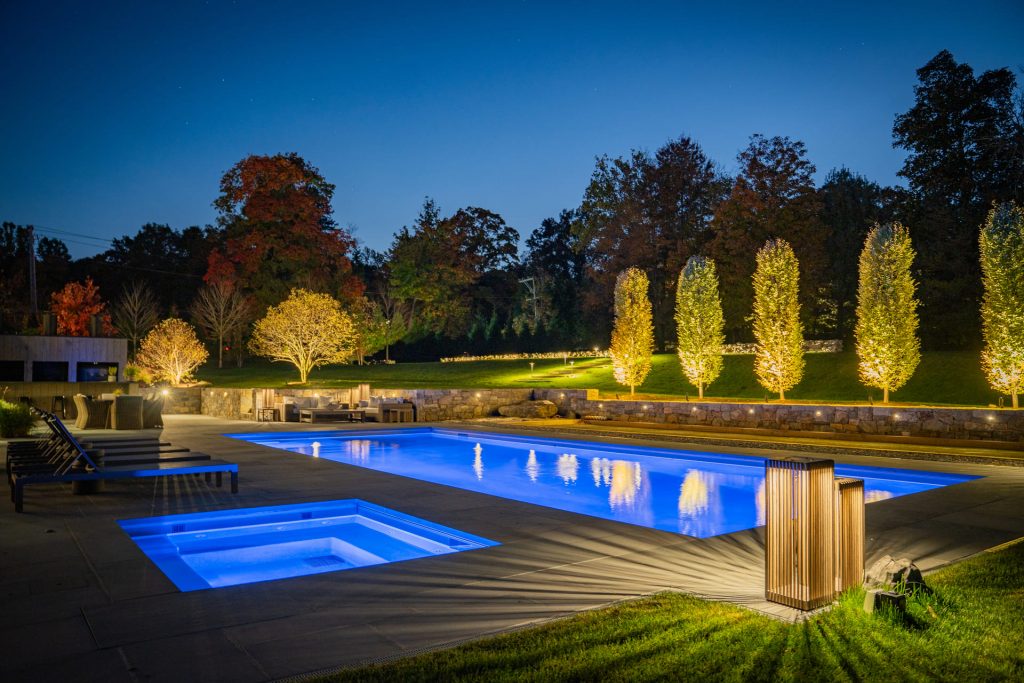
A common mistake homeowners make when considering a pool spa addition is assuming every pool can integrate a spa with little trouble. The reality is that:
- Budget
- Property layout
- Plumbing systems
- Pool system capacity
All play a role in the form and functionality of your new spa.
Like with any renovation, Westchester County and Connecticut-area homeowners are best to plan these factors before construction begins.
The ideal pool spa addition does not simply add a new, warmer dimension to the classic swimming experience. It integrates into your pre-existing pool systems, enhancing rather than working against them.
Why Should I Connect My Pool and Spa?
Most in-ground home pool systems connect the pool and spa into a conjoined unit, instead of two independent systems. This is done by incorporating a slight spillover area between the pool and the spa, allowing the same water and filtration systems to be used both while keeping them separate in function.
Some of the benefits of a conjoined pool and spa include:
- Easier maintenance: One combined water source rather than two means easier cleaning and filtration.
- Easier heating: Heating from the spa can also keep your pool water warmer, allowing you to save money on separate pool and spa heating systems.
- Switching: Connecting the two systems allows you to easily switch between pool to spa, or vice versa.
- Visual appeal: The spillover area creates a greater sense of aesthetic continuity between the two swimming areas.
How Much Does a Pool Spa Addition Cost?
Like many aspects of the spa construction process, the answer to this question varies widely depending on cost-influencing factors:
- Equipment additions: If the addition of a spa means upgrading to new pool equipment, that adds to the final price.
- Size: Larger spas are more costly to build than smaller ones.
- Finishing selections: Much like a standard pool, spas utilize tile, plaster, or stone finishes as well.
- Permits: Acquiring the proper local permit typically comes with a fee.
As the greater New York City area has some of the highest labor costs nationwide, installing a pool spa addition typically ranges from $15,000 to $55,000, depending on the above factors.
A common choice many homeowners make is to accommodate a spa addition when doing general pool renovations, which are often costly affairs to begin with.
Planning the Ideal Pool Spa Addition
Whether your pool dates back to half a decade or half a century, spa additions are one of the most popular types of pool renovations. It is increasingly common for pools to be installed with a spa from the beginning or added to older pools. The process of planning and building the renovation, however, varies significantly from case to case.
It is advisable to meet with a licensed contractor before making any plans, particularly if you lack prior experience with home swimming system construction. Professionals can help answer any questions you may have about the process, as well as bring information to your attention you may not have known about. This can include:
- Determining whether there is enough space on your property
- Necessary additions to your pool filtration/chemical systems
- Optimal area of the pool to place the spa
- Navigating necessary local permits
The Renovation Process
After meeting with a design consultant and establishing a proper, well-tailored plan, building a pool spa addition typically involves the following steps.
1. Permits
Before any construction can be carried out, Westchester and Fairfield County residents must gain the proper plumbing permits from the local government. Though it may seem like a frustrating roadblock on the surface, the permits are in place to ensure the final product is safe to use and generates value.
In Westchester and Fairfield counties, the amount of time it takes to approve a permit depends on your municipality. Some are more permissive and efficient, while others may take a few weeks or even months. Regardless of where you live, acquiring the proper permit is a foundational moment in the process.
2. Excavation
Once the necessary permits are acquired, construction can begin and the first step is excavation. Digging will begin at the pool’s shell, so you will need your drain your pre-existing pool.
After the excavation process, a licensed contractor will come to inspect the area and check one final time to ensure the necessary plumbing and equipment are in place.
3. Building the Spa
For the most part, building a spa resembles that of a regular pool, just on a smaller scale. The first step is to construct the spa shell, typically of gunite or shotcrete concrete. This will give your spa its definitive shape and structure.
After creating the concrete shell, finishing is added. Whether that be tile, plaster, or stone, many pool owners opt for the same finish as their pool, giving the integrated pool and spa a coherent visual appearance.
If your pool systems and equipment need to be upgraded, this is typically when that is carried out. Most pool spa additions will require some revisions in order to manage the larger water volume. If your pool is older, this can also be a good time for a general revamp.
4. Your New Spa
After one final inspection and approval from your local government, your new pool spa addition is ready for use.
The startup process is much like that of a pool. Once you have:
- Filled with water
- Shocked
- Ensured water chemistry is balanced
Your new spa should be open for business.
Want to Make Your Pool Spa Addition a Reality?
A fixture in the Lower Hudson Valley for more than half a century, Shoreline Pools has helped thousands of families design and renovate pools to their ideals over the decades. We are proud to be family-run and home to a devoted, attentive staff ready to answer any questions you may have about your backyard oasis.
Looking to spa up in time for next summer? Contact us via our inquiry form or by dialing our construction number at (203) 967-1203 today.