Connecticut’s harsh winters put even the strongest pool structures (like shotcrete) to the test. The rapid temperature swings, freeze-thaw cycles and coastal winds make Connecticut pool closing a necessity. It’s the biggest, most important part of pool winterization in CT. As such, it’s important that homeowners follow a precise plan to ensure reliable shotcrete pool freeze protection. Without it, you’re leaving your pool unstable and exposed, and it won’t be ready to open in the spring.
You can also read more about how winterization fits into broader design-friendly safety planning.
Quick Answer
Winterizing a shotcrete pool in CT means setting correct winter chemistry, lowering water to a safe level, blowing out plumbing lines, and installing a secure, storm-ready cover. Fairfield-area pools need extra freeze protection because coastal weather causes stronger winter stress. With proper steps, your shotcrete pool stays safe through winter and opens cleanly in spring.
Why CT Shotcrete Pools Need Strong Winter Protection
Shotcrete is durable but porous, which makes it sensitive to freezing conditions. Tiny amounts of water can get into the shotcrete itself. As it freezes inside the surface and expands, pressure builds. During warmer spells, contraction repeats the cycle and strains the shell.
Fairfield’s shoreline increases these effects. Salt-air exposure and sharper temperature shifts make shotcrete prep in Fairfield especially important for winterizing inground pools in Fairfield County. Towns like Westport, Darien, and Norwalk experience storm patterns that demand stricter winter prep.
How Winter Actually Damages Shotcrete Pools
Shotcrete pools may show scaling or discoloration when the chemistry is out of whack. Tile cracking and microfractures occur at incorrect water levels or pressure. Pumps and heaters often fail if there’s water left inside them and it freezes.
Quick Comparison Table
| Issue | Cause | How Winterization Helps |
| Surface scaling | Low calcium + freezing | Stabilizes water balance |
| Tile cracking | Incorrect water level | Maintains partial submersion |
| Equipment failure | Freezing water inside | Full drainage & purge |
Step 1: Set Winter Chemistry Levels That Protect Shotcrete All Season
Winter chemistry is one of the most important steps in stabilizing pool water for CT winters. Still water sits for months, so imbalances can quickly cause etching or scale. Effective Connecticut pool closing always begins with a pre-winter chemical adjustment.
Recommended chemistry ranges include:
- pH: 7.2–7.6
- Total Alkalinity: 100–150 ppm
- Calcium Hardness: 200–400 ppm
- Chlorine: Appropriate winter level
- Algaecide: Non-copper formulation
These levels protect plaster during cold months. Fairfield shotcrete winter preparation sometimes includes a second balancing session due to heavy fall debris. Waiting for water temperatures near 60°F also stabilizes conditions for winter.
Avoid These Chemistry Mistakes That Harm Your Shotcrete Finish
Soft water leaches minerals from the plaster and weakens it. Closing too early allows algae to blossom under the cover. Proper chemistry also helps reduce issues that may complicate insurance claims after winter storms.
Step 2: Adjust Water Levels the Right Way for Freeze Safety
Water levels influence tile protection and structural balance during freezing weather. Thus, lowering the water level to just below the skimmer mouth is an imperative step in shotcrete prep in Fairfield. At this level, there’s space for the water to expand as it freezes, and enough protection for tiles from the winter air.
Draining too far exposes plaster to dry cold, which leads to cracking or shrinkage. Maintaining correct water levels also helps balance soil pressure around the shell during Connecticut’s freeze–thaw cycles.
What Is the Ideal Water Level for Winterizing a CT Shotcrete Pool?
The ideal level sits just below the skimmer opening. It protects tile, limits plaster exposure, and allows safe expansion during freezing.
3 Water-Level Rules Every CT Shotcrete Pool Owner Should Follow
- Lower water slightly below the skimmer opening.
- Use a skimmer plug or Gizzmo for expansion.
- Do not drain too far, especially in coastal towns.
Step 3: Choose a Winter Cover Built for CT’s Coastal Winds
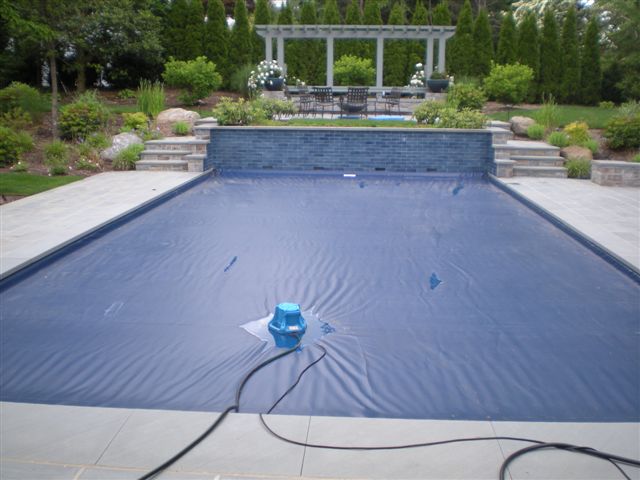
Winter covers shield pools against storms and debris, providing key shotcrete pool freeze protection. Fairfield and nearby shoreline towns often experience winds that need stronger cover systems.
Cover Comparison Table
| Cover Type | Pros | Cons | Ideal Use |
| Solid Cover | Strong debris protection | Heavy, needs pump | Wooded areas |
| Mesh Cover | Light, safe, easy | Allows fine debris | Low-debris areas |
| Hybrid Cover | Best wind + debris balance | Higher cost | Coastal CT |
Hybrid covers excel in windy Connecticut shoreline communities and withstand fluctuating winter temperatures longer.
Storm-Ready Cover Reinforcement Checklist
- Tighten straps on wind-facing sides.
- Check anchors for corrosion.
- Add cross-straps as needed.
- Confirm cover pump operation.
- Remove leaves to prevent ice buildup.
Step 4: Protect Your Pool Equipment From Freeze Damage
The most common cause of pumps, filters, and heaters failing is water left inside them. Winterizing a shotcrete pool in CT requires purging lines and draining components to prevent cracking.
Essential Equipment Steps
- Blow out all plumbing lines.
- Add pool antifreeze where appropriate.
- Drain pump, filter, and heater.
- Remove salt cells.
- Protect automation from moisture.
Fairfield-area shotcrete pools often include water features and automation that need to be protected. These components are more vulnerable in shoreline microclimates.
Equipment Vulnerability Table
| Component | Winter Risk | Prevention |
| Pumps | Cracks from frozen water | Drain chambers fully |
| Filters | Housing expansion | Open drain plugs |
| Heaters | Heat exchanger cracks | Purge internal water |
| Salt Systems | Plate damage | Remove & store indoors |
| Automation | Sensor failure | Insulate and disconnect |
Step 5: Add Coastal Stormproofing for Fairfield’s Harsh Winters
Shoreline towns in Fairfield County experience storms that continue long after closing their pools. Strong gusts can shift covers or pull loose anchors. That’s why proactive stormproofing is a necessary step in winterizing Fairfield County’s inground pools.
Essential Storm Readiness Tasks for Coastal CT Pools
- Remove all loose items.
- Retighten straps after storms.
- Clear debris promptly.
- Ensure deck drains stay open.
- Reposition cover pump as needed.
Your Winter Inspection Routine for Better Freeze Protection
- Before storms: Tighten straps and secure the area.
- After storms: Check anchors and pump function.
- Monthly: Test calcium and alkalinity.
Most Connecticut pool closings happen from late September to mid-October. Coastal towns tend to get colder later, so they often winterize toward that latter end of that spectrum.
Your Complete CT Shotcrete Pool Winterization Checklist
- Clean and remove debris.
- Balance chemistry.
- Lower water to correct level.
- Plug skimmers and returns.
- Blow out lines and add antifreeze.
- Drain equipment.
- Install a coastal-grade winter cover.
- Reinforce straps.
- Conduct monthly checks.
- Inspect after every storm.
This checklist outlines the foundation of pool winterization in CT.
Key Takeaways for Protecting a CT Shotcrete Pool in Winter
- Winterization protects plaster, tile, and equipment.
- Fairfield County homes need stronger wind and storm prep.
- Chemistry and water levels must stay within precise ranges.
- Fully drained plumbing prevents freeze damage.
- Regular inspections boost long-term freeze protection.
Keeping CT Shotcrete Pools Safe Through Winter
You can’t protect shotcrete pools through Connecticut’s freezing weather without winterization. With proper chemistry, water-level management, equipment drainage, and cover reinforcement, you can achieve reliable shotcrete pool freeze protection year after year. Homeowners along the shoreline benefit even more from attentive stormproofing. With the right approach to pool winterization in CT, your shotcrete pool stays safe, stable, and ready for spring.
If you’re looking to extend your swim season before closing, learn more about efficient, low-noise pool heating options.